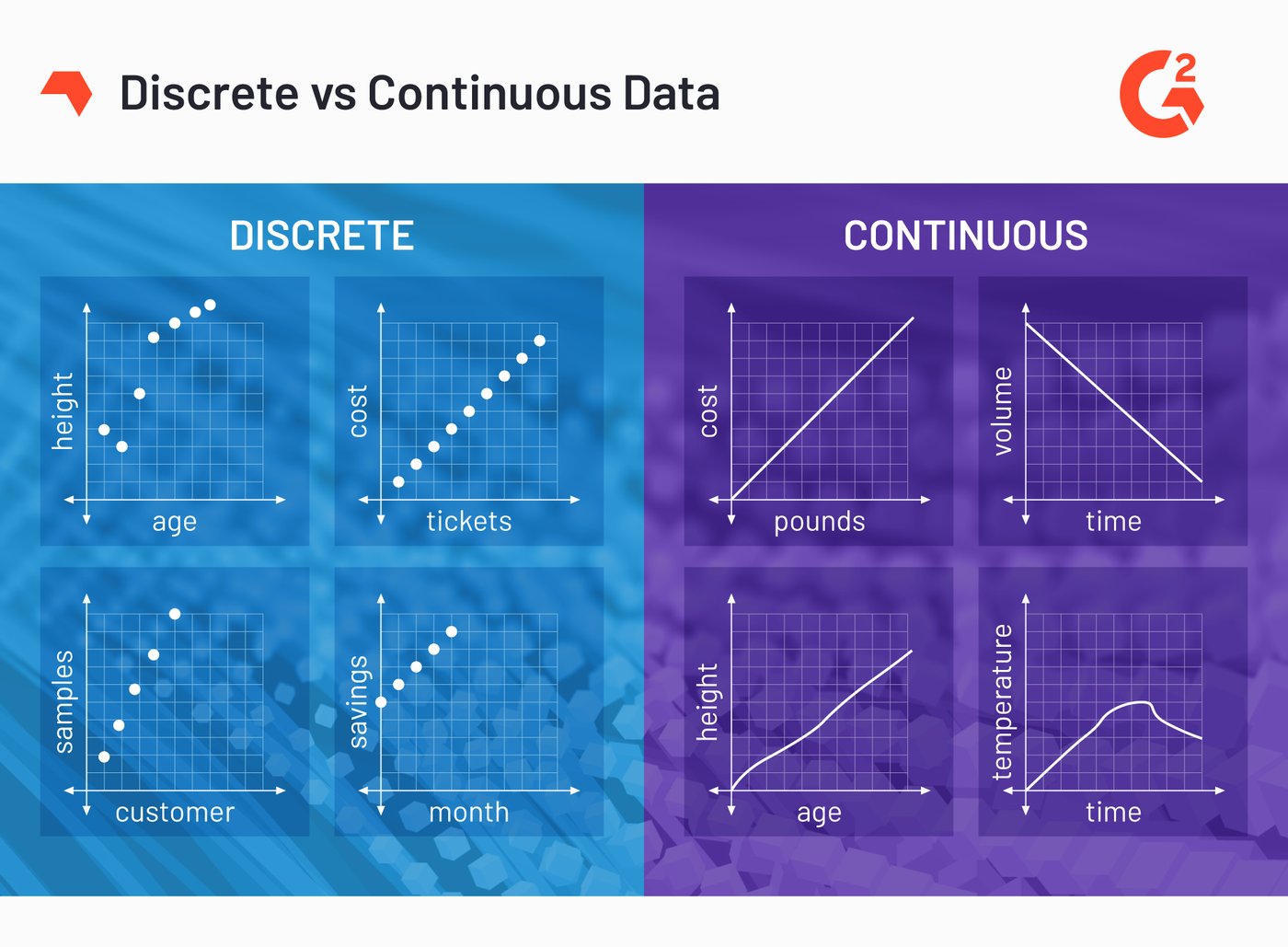

Understanding the concept of continuous variables is fundamental in statistics and data analysis. A continuous variable is one that can take on an infinite number of values within a given range. Unlike discrete variables, which are countable and distinct, continuous variables can be measured and can include fractions or decimals. This makes them particularly useful in fields such as physics, engineering, and economics, where precise measurements are crucial. In this post, we will delve into the intricacies of continuous variables, providing a continuous variable example to illustrate their application and importance.
What is a Continuous Variable?
A continuous variable is a type of variable that can take any value within a range. This range can be infinite or finite, but the key characteristic is that the variable can take on any value, including fractions and decimals. For instance, time, weight, and temperature are all examples of continuous variables. These variables are measured rather than counted, which allows for a high degree of precision in data collection and analysis.
Characteristics of Continuous Variables
Continuous variables have several distinct characteristics that set them apart from discrete variables:
- Infinite Possibilities: Continuous variables can take on an infinite number of values within a given range. For example, the height of a person can be measured to any decimal place, such as 5.567 feet.
- Measured, Not Counted: Continuous variables are measured using a scale, such as a ruler or a thermometer, rather than being counted.
- Fractional Values: Continuous variables can include fractional or decimal values, allowing for precise measurements.
- Range of Values: Continuous variables can have a finite or infinite range. For example, temperature can range from -273.15°C (absolute zero) to infinity, while the height of a person is typically within a finite range.
Continuous Variable Example
To better understand continuous variables, let’s consider a continuous variable example from the field of meteorology. Meteorologists often measure temperature, which is a continuous variable. Temperature can take on any value within a range, and it is measured using a thermometer. For instance, the temperature on a particular day might be 25.3°C, 25.35°C, or any other value within the range of possible temperatures.
Temperature is a continuous variable because it can take on an infinite number of values within a given range. For example, the temperature in a room can be measured to any decimal place, such as 22.567°C. This allows meteorologists to make precise predictions and analyses based on temperature data.
Another continuous variable example is the weight of an object. Weight can be measured to any decimal place, such as 1.234 kg. This allows for precise measurements in fields such as engineering and physics, where accuracy is crucial. For instance, the weight of a car can be measured to the nearest gram, allowing engineers to make precise calculations and adjustments.
Applications of Continuous Variables
Continuous variables are used in a wide range of fields, including:
- Physics: In physics, continuous variables such as time, distance, and velocity are used to describe the motion of objects. For example, the distance traveled by a car can be measured to any decimal place, allowing physicists to make precise calculations and predictions.
- Engineering: In engineering, continuous variables such as weight, pressure, and temperature are used to design and analyze systems. For example, the weight of a bridge can be measured to the nearest gram, allowing engineers to make precise calculations and adjustments.
- Economics: In economics, continuous variables such as income, price, and interest rates are used to analyze economic trends and make predictions. For example, the price of a stock can be measured to any decimal place, allowing economists to make precise predictions and analyses.
- Medicine: In medicine, continuous variables such as blood pressure, heart rate, and body temperature are used to monitor and diagnose patients. For example, blood pressure can be measured to any decimal place, allowing doctors to make precise diagnoses and treatments.
Measuring Continuous Variables
Measuring continuous variables requires precise instruments and techniques. Here are some common methods for measuring continuous variables:
- Rulers and Tape Measures: Used to measure length, height, and distance. For example, a ruler can be used to measure the length of a table to the nearest millimeter.
- Scales and Balances: Used to measure weight. For example, a digital scale can be used to measure the weight of an object to the nearest gram.
- Thermometers: Used to measure temperature. For example, a digital thermometer can be used to measure body temperature to the nearest tenth of a degree.
- Stopwatches and Timers: Used to measure time. For example, a stopwatch can be used to measure the time it takes to run a mile to the nearest second.
Analyzing Continuous Variables
Analyzing continuous variables involves statistical methods that can handle the infinite possibilities of values. Here are some common techniques for analyzing continuous variables:
- Descriptive Statistics: Used to summarize the main features of a dataset. For example, the mean, median, and standard deviation can be used to describe the central tendency and variability of a dataset.
- Inferential Statistics: Used to make inferences about a population based on a sample. For example, a t-test can be used to compare the means of two groups to determine if there is a significant difference.
- Regression Analysis: Used to model the relationship between a dependent variable and one or more independent variables. For example, linear regression can be used to model the relationship between height and weight.
- Correlation Analysis: Used to measure the strength and direction of the relationship between two variables. For example, the Pearson correlation coefficient can be used to measure the linear relationship between two continuous variables.
Continuous Variables vs. Discrete Variables
It is important to distinguish between continuous and discrete variables, as they require different methods of analysis. Here is a comparison of continuous and discrete variables:
| Characteristic | Continuous Variables | Discrete Variables |
|---|---|---|
| Values | Can take any value within a range | Can take on specific, distinct values |
| Measurement | Measured using a scale | Counted |
| Examples | Height, weight, temperature | Number of students, number of cars |
| Analysis | Descriptive and inferential statistics, regression analysis | Frequency distributions, chi-square tests |
Understanding the difference between continuous and discrete variables is crucial for selecting the appropriate statistical methods and techniques for data analysis.
📝 Note: Continuous variables can be converted to discrete variables by grouping them into intervals or categories. For example, temperature can be grouped into intervals such as "cold," "mild," and "hot." However, this conversion can result in a loss of information and precision.
Challenges in Working with Continuous Variables
While continuous variables offer a high degree of precision, they also present several challenges:
- Data Collection: Measuring continuous variables requires precise instruments and techniques, which can be time-consuming and costly.
- Data Analysis: Analyzing continuous variables requires statistical methods that can handle the infinite possibilities of values, which can be complex and computationally intensive.
- Data Interpretation: Interpreting the results of continuous variable analysis can be challenging, as it requires a deep understanding of statistical concepts and methods.
Despite these challenges, continuous variables are essential for precise and accurate data analysis in many fields. By understanding the characteristics and applications of continuous variables, researchers and analysts can make informed decisions and draw meaningful conclusions from their data.
Continuous variables are a fundamental concept in statistics and data analysis. They allow for precise measurements and analyses, making them essential in fields such as physics, engineering, and economics. By understanding the characteristics, applications, and challenges of continuous variables, researchers and analysts can make informed decisions and draw meaningful conclusions from their data. Whether measuring temperature, weight, or any other continuous variable, the key is to use the appropriate methods and techniques for data collection, analysis, and interpretation.
Continuous variables are a powerful tool for data analysis, offering a high degree of precision and flexibility. By understanding the characteristics and applications of continuous variables, researchers and analysts can make informed decisions and draw meaningful conclusions from their data. Whether measuring temperature, weight, or any other continuous variable, the key is to use the appropriate methods and techniques for data collection, analysis, and interpretation. This ensures that the data is accurate, reliable, and useful for making informed decisions.
Related Terms:
- 5 examples of continuous variables
- discrete variable example
- sample of continuous variable
- continuous variable definition
- what does continuous variable mean
- 10 example of continuous variable