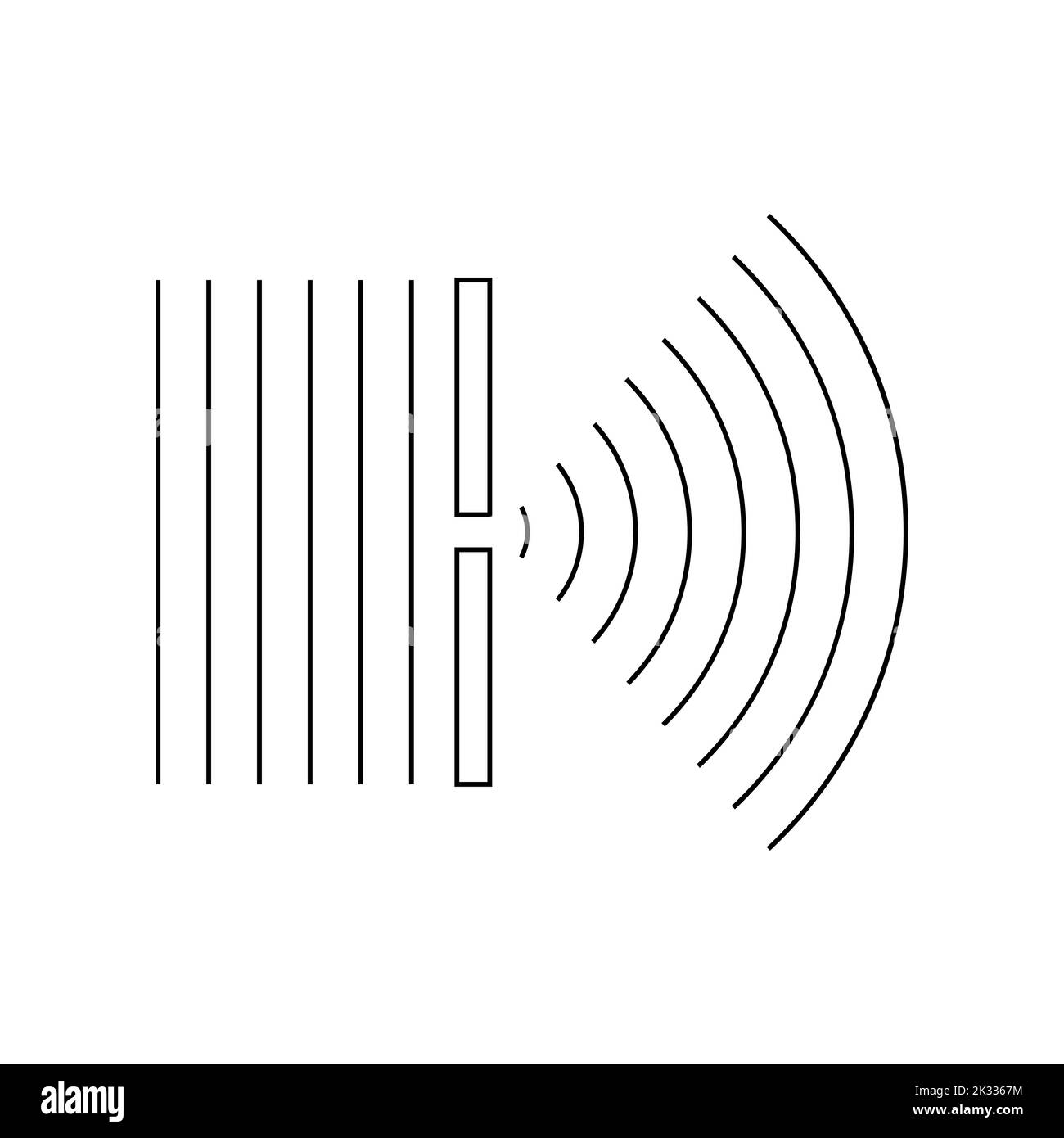

Light is a fascinating phenomenon that has captivated scientists and enthusiasts alike for centuries. One of the most intriguing aspects of light is its ability to bend and spread out when it encounters obstacles or passes through small openings. This phenomenon, known as diffraction, has numerous applications and examples in our daily lives. Understanding diffraction light examples can provide insights into the behavior of light and its practical uses.
Understanding Diffraction
Diffraction is a fundamental property of waves, including light waves. It occurs when a wave encounters an obstacle or passes through an aperture, causing it to bend and spread out. This bending and spreading can create interference patterns, which are characteristic of wave behavior. Diffraction is particularly noticeable when the size of the obstacle or aperture is comparable to the wavelength of the light.
Key Principles of Diffraction
To fully appreciate diffraction light examples, it’s essential to understand the key principles behind this phenomenon:
- Wave Nature of Light: Light exhibits both particle and wave properties. Its wave nature is crucial for understanding diffraction.
- Interference Patterns: When light waves diffract, they can interfere constructively or destructively, creating patterns of bright and dark fringes.
- Single-Slit and Double-Slit Experiments: These classic experiments demonstrate how light diffracts and interferes when passing through narrow slits.
Diffraction Light Examples in Everyday Life
Diffraction is not just a theoretical concept; it has practical applications and can be observed in various everyday scenarios. Here are some notable diffraction light examples:
Rainbows
Rainbows are a beautiful example of diffraction and refraction. When sunlight passes through raindrops, it is refracted and diffracted, separating into its constituent colors. The resulting spectrum of colors is a stunning display of light’s wave properties.
CD and DVD Reflections
Have you ever noticed the colorful reflections on the surface of a CD or DVD? These reflections are due to diffraction. The tiny pits and grooves on the surface of the disc act as a diffraction grating, causing light to spread out and create a spectrum of colors.
Holograms
Holograms are another fascinating example of diffraction. They use the interference patterns created by diffracted light to produce three-dimensional images. When light is diffracted by a holographic plate, it reconstructs the original image, creating a realistic and immersive visual experience.
X-Ray Diffraction
In the field of science, X-ray diffraction is a powerful tool used to determine the structure of crystals. When X-rays are diffracted by the atoms in a crystal, they create a pattern that can be analyzed to understand the crystal’s atomic arrangement. This technique is crucial in fields such as materials science and biology.
Optical Fibers
Optical fibers rely on the principles of diffraction and total internal reflection to transmit light over long distances. The core of an optical fiber is designed to diffract light in such a way that it stays confined within the fiber, minimizing loss and ensuring efficient transmission.
Camera Lenses
Camera lenses use diffraction to focus light onto the image sensor. The aperture of the lens controls the amount of light that enters the camera and the degree of diffraction. A smaller aperture increases diffraction, which can affect the sharpness and clarity of the image.
Diffraction Light Examples in Scientific Experiments
Diffraction is a cornerstone of many scientific experiments and has led to significant discoveries. Here are some key examples:
Single-Slit Experiment
The single-slit experiment is a classic demonstration of diffraction. When light passes through a narrow slit, it diffracts and creates a pattern of bright and dark fringes on a screen. This pattern is a result of the interference of the diffracted light waves.
Double-Slit Experiment
The double-slit experiment is another fundamental demonstration of diffraction and interference. When light passes through two closely spaced slits, it creates an interference pattern on a screen. This pattern consists of alternating bright and dark fringes, illustrating the wave nature of light.
Diffraction Grating
A diffraction grating is an optical component with a periodic structure that diffracts light into its constituent wavelengths. When light passes through a diffraction grating, it is spread out into a spectrum of colors. This principle is used in spectrometers to analyze the composition of light sources.
Applications of Diffraction
Diffraction has numerous applications in various fields, from optics to materials science. Here are some key applications:
Spectroscopy
Spectroscopy is the study of the interaction between matter and electromagnetic radiation. Diffraction gratings are used in spectrometers to analyze the spectrum of light emitted or absorbed by a sample. This technique is crucial in fields such as astronomy, chemistry, and physics.
Imaging Techniques
Diffraction plays a crucial role in imaging techniques, such as microscopy and medical imaging. In microscopy, diffraction limits the resolution of the image, while in medical imaging, diffraction is used to create detailed images of internal structures.
Telecommunications
In telecommunications, diffraction is used in the design of optical fibers and antennas. Optical fibers use diffraction to transmit light over long distances with minimal loss, while antennas use diffraction to focus and direct radio waves.
Material Science
In material science, diffraction is used to study the structure of materials at the atomic level. X-ray diffraction and electron diffraction are techniques used to determine the crystal structure of materials, which is essential for understanding their properties and behavior.
Diffraction Light Examples in Nature
Nature provides numerous examples of diffraction, showcasing the beauty and complexity of light’s wave properties. Here are some notable examples:
Iridescence
Iridescence is a phenomenon where the color of an object changes with the viewing angle. This effect is due to the diffraction of light by the microscopic structures on the surface of the object. Examples of iridescence can be seen in the wings of butterflies, the feathers of birds, and the shells of beetles.
Oil Slicks
Oil slicks on water surfaces create colorful patterns due to diffraction. The thin layer of oil causes light to diffract and interfere, producing a spectrum of colors. This effect is often seen on puddles or calm bodies of water after an oil spill.
Sunsets and Sunrises
The vibrant colors of sunsets and sunrises are a result of diffraction and scattering. As the sun approaches the horizon, its light passes through more of the Earth’s atmosphere, causing it to diffract and scatter. This results in a beautiful display of red, orange, and pink hues.
Halos Around the Sun or Moon
Halos are optical phenomena that appear as rings of light around the sun or moon. They are caused by the diffraction of light by ice crystals in the atmosphere. The most common type of halo is the 22-degree halo, which appears as a circular ring around the sun or moon.

Diffraction Light Examples in Technology
Diffraction is also utilized in various technological applications, enhancing our ability to manipulate and utilize light. Here are some key examples:
Laser Technology
Lasers rely on the principles of diffraction to produce coherent light. The diffraction grating in a laser cavity helps to select and amplify specific wavelengths, resulting in a highly focused and intense beam of light. This technology is used in various applications, from medical procedures to industrial cutting and welding.
Photolithography
Photolithography is a process used in the manufacture of integrated circuits and microchips. It involves using light to transfer a pattern onto a photosensitive material. Diffraction plays a crucial role in this process, as it determines the resolution and accuracy of the pattern transfer.
Optical Data Storage
Optical data storage technologies, such as CDs, DVDs, and Blu-ray discs, use diffraction to read and write data. The pits and grooves on the surface of the disc act as a diffraction grating, allowing the laser to read the encoded information.
Fiber Optic Communication
Fiber optic communication relies on the principles of diffraction to transmit data over long distances. Optical fibers use diffraction to confine light within the fiber, minimizing loss and ensuring efficient transmission. This technology is used in telecommunications, internet infrastructure, and data centers.

Diffraction Light Examples in Art and Design
Diffraction is not only a scientific phenomenon but also a source of inspiration in art and design. Here are some examples of how diffraction is used in creative fields:
Kaleidoscopes
Kaleidoscopes use the principles of diffraction and reflection to create beautiful patterns. When light passes through the colored glass or mirrors inside a kaleidoscope, it diffracts and reflects, creating a mesmerizing display of colors and shapes.
Stained Glass Windows
Stained glass windows are a classic example of how diffraction can be used to create stunning visual effects. The colored glass diffracts light, producing a spectrum of colors that illuminate the interior of a building. This technique is often used in churches and cathedrals to create a serene and spiritual atmosphere.
Diffraction Grating Art
Diffraction grating art involves using diffraction gratings to create unique and visually appealing patterns. Artists use these gratings to manipulate light and create intricate designs that change with the viewing angle. This form of art combines science and creativity, resulting in captivating visual experiences.
Diffraction Light Examples in Education
Diffraction is a fundamental concept in physics and optics education. Here are some ways diffraction light examples are used in educational settings:
Laboratory Experiments
In physics and optics laboratories, students often conduct experiments to observe and measure diffraction. These experiments help students understand the principles of wave behavior and interference. Common experiments include the single-slit and double-slit experiments, as well as the use of diffraction gratings.
Interactive Demonstrations
Interactive demonstrations are an effective way to teach diffraction. Teachers use various tools, such as lasers, slits, and gratings, to demonstrate diffraction and interference patterns. These demonstrations help students visualize the concepts and understand their practical applications.
Educational Software
Educational software and simulations are valuable resources for teaching diffraction. These tools allow students to explore diffraction light examples in a virtual environment, adjusting parameters and observing the results. This interactive approach enhances learning and engagement.
📚 Note: Diffraction is a complex topic, but with the right educational tools and demonstrations, it can be made accessible and engaging for students of all levels.
Diffraction is a fascinating phenomenon that has wide-ranging applications and examples in our daily lives. From the beautiful colors of a rainbow to the intricate patterns on a CD, diffraction light examples illustrate the wave nature of light and its practical uses. Understanding diffraction not only enhances our appreciation of the natural world but also opens up new possibilities in technology, art, and education. By exploring diffraction light examples, we gain insights into the behavior of light and its role in shaping our world.
Related Terms:
- diffraction around a corner
- diffraction of light class 12
- single slit diffraction pattern
- diffraction of light pictures
- diffraction of light meaning
- diffraction of light diagram